How to Remove Green Algae From Render (Safely)
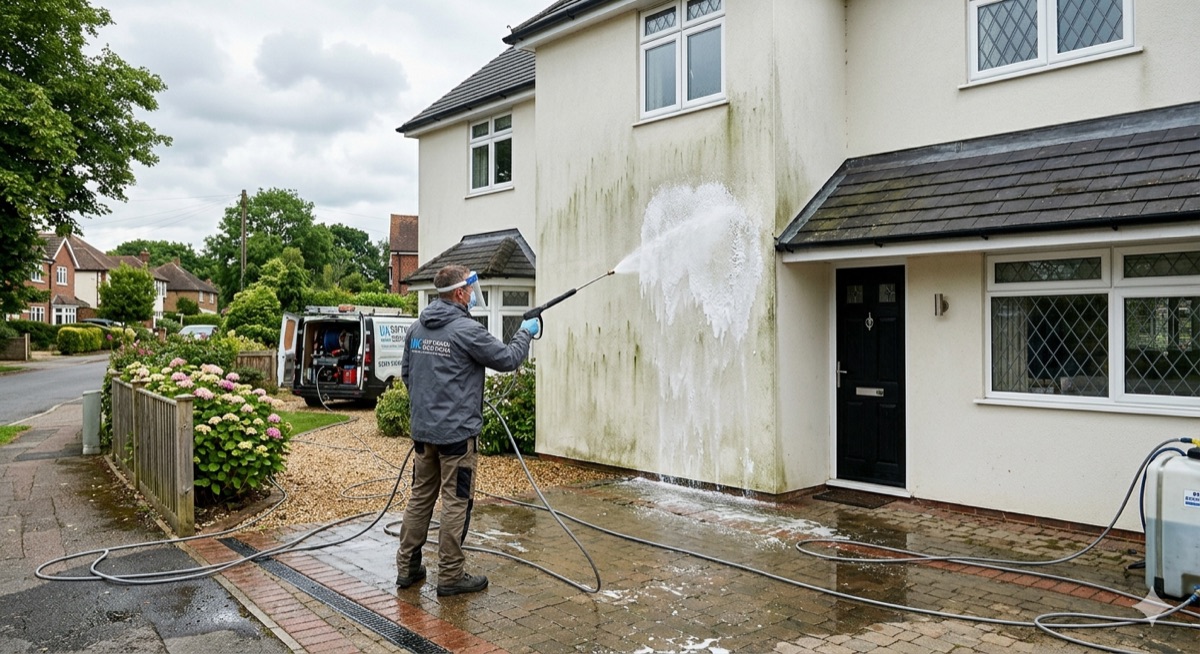
That green film creeping across your render isn't dirt, and it won't simply wash off in the rain. It's a living growth — and how you tackle it makes the difference between a wall that stays clean for years and one that's worse than when you started. Here's the honest guide.
What is the green growth on render?
It's algae — a microscopic plant that colonises damp, shaded surfaces. It needs three things: moisture, a little light, and airborne nutrients, all of which a typical render wall provides in abundance. Render is slightly porous and textured, so it holds water against the surface long after rain, giving algae the perfect place to take hold and spread.
You'll often see it alongside two relatives: black streaks and spotting (usually a darker algae or fungal growth, common under windowsills and below roof junctions where water runs), and orange, grey or white crusty patches, which are lichen — a tougher, slower-growing organism that grips harder and needs proper treatment to shift.
Why it always seems worse on one side of the house
If your north or east-facing wall is far greener than the rest, that's no coincidence. Those elevations get the least direct sun, so they stay damp longest — exactly what algae wants. Overhanging trees, nearby hedges and north-facing gables all make it worse. Around Chelmsford and the damper, low-lying parts of Essex near the rivers and estuary, render greens up noticeably faster than in drier, more open spots.
The big mistake: pressure washing render
It's tempting to attack green render with a pressure washer, and plenty of people do. It's the wrong move, for three reasons:
- It damages the render. High pressure strips the surface coating, and on thin-coat silicone renders or K-rend it can blow out whole sections. That's an expensive repair.
- It drives water into the wall. Forcing water behind porous render can cause damp problems inside.
- It doesn't actually work. Blasting removes the visible top layer but leaves the algae spores alive in the surface. Within a few months the green is back — often worse, because the surface is now rougher and holds even more moisture.
In short, pressure washing treats the symptom and damages the wall while leaving the cause untouched.
The method that actually works: softwashing
The professional, manufacturer-approved approach is softwashing. Instead of force, it uses chemistry. A specialist biocide is applied at very low pressure; it soaks into the surface and kills the algae, lichen and fungal staining at the root. Over the following days and weeks the dead growth weathers away and the render returns to an even, clean finish.
Because the growth is killed rather than just knocked off, the results last years rather than months — and there's no risk of damaging the render or forcing water into the wall. It's slower-acting and less dramatic on the day than a pressure-wash blast, but it's the only method that genuinely solves the problem.
Can you do it yourself?
For a small, low, easily-reached patch, a DIY render treatment from a builders' merchant can help short-term. But there are real catches: getting the dilution right matters (too strong scorches plants and can mark coloured render), reaching upper storeys safely is difficult, and shop-bought products are usually weaker and shorter-lived than professional-grade biocide. For anything above head height, anything heavily affected, or coloured/thin-coat render, it's genuinely safer and more cost-effective to get it treated properly.
How to keep render clean for longer
- Cut back overhanging branches and trim hedges away from the wall to let it dry and get more light.
- Keep gutters clear so water isn't running down the render (a common cause of those black streaks).
- Consider an annual maintenance softwash on north-facing walls, which regrow fastest.
- Deal with it early — a light green film is far quicker and cheaper to treat than years of heavy lichen.
Frequently asked questions
What is the green stuff growing on my render?
It's algae — a microscopic plant that takes hold on damp, shaded surfaces, feeding on moisture, light and airborne nutrients. Render's porous, textured surface holds water and gives it the perfect footing. Black streaks are a related growth; orange or grey crusty patches are lichen.
Can I remove render algae with a pressure washer?
You can blast off the surface layer, but it's the worst option — it strips the render, forces water behind it, and leaves the spores alive so the green returns within months. A softwash is the safe, lasting method.
Does bleach or a DIY spray work?
Household bleach is too weak and inconsistent, and can mark coloured render or scorch plants. A small low patch may improve short-term, but it rarely lasts. Professionals use a controlled biocide at the right dilution that kills the algae at the root.
How long until it comes back?
After a proper softwash, render typically stays clean for 18 months to 3 years depending on shade, trees and aspect. North-facing walls regrow fastest; an annual maintenance treatment keeps it clean year-round.
Related: Render & softwash cleaning · Why is my roof going black? · How often should you clean your gutters?